Czechia vs Poland, Slovakia and Hungary: Where to Expand First
- “Central Europe” is not one market. Four separate languages, four currencies, different dominant platforms. Treating it as one rollout is the classic mistake.
- Poland is scale (~36.5m people), Czechia is purchasing power (highest GDP per capita in PPS of the four), Slovakia offers the convenience of the euro, Hungary needs full localization and HUF pricing.
- There is no single “best first market”: the right choice depends on whether you optimise for volume, purchasing power, operational simplicity or local fit.
- We’re a Czech agency; below is an honest framework, not a pitch for Czechia in every case.
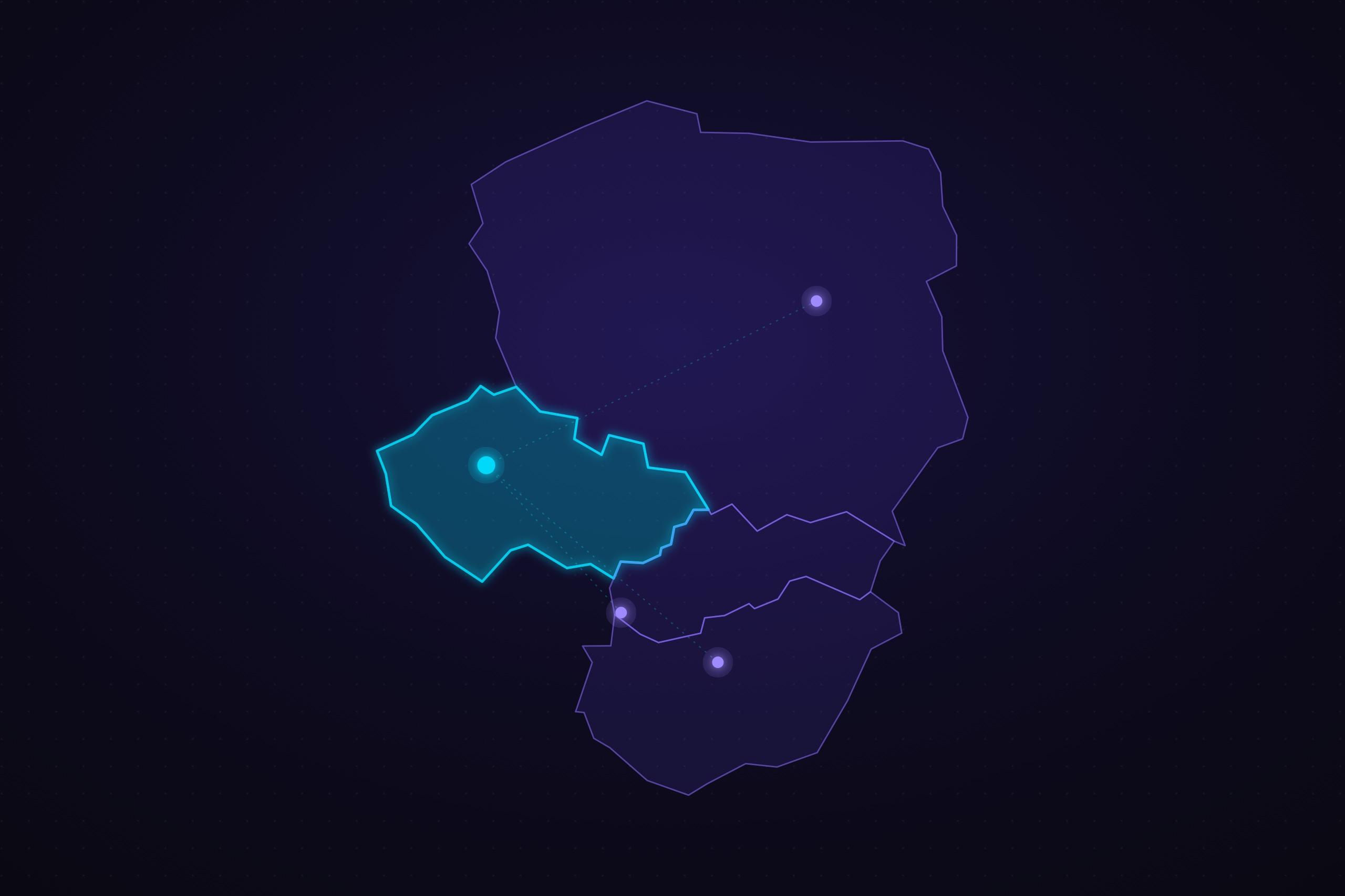
The mistake: treating “CEE” as one market
Foreign expansion plans love a tidy region. “Let’s do Central Europe” becomes one budget and one translation pass stretched across four countries, and it underperforms in all of them at once. The reality: Czech, Polish, Slovak and Hungarian are four distinct languages, the currencies are CZK, PLN, EUR and HUF, and the dominant platforms differ (Seznam matters in Czechia, Allegro dominates Polish e-commerce). Sequencing these markets deliberately beats spreading a limited budget across all four markets.
This guide gives you the comparable numbers and an honest framework for picking the first one. We run Czech campaigns, so we’ll tell you plainly when Czechia is not your best starting point.
The four markets, side by side
| Market | Population (2025) | E-commerce (2025 est.) | GDP/capita, PPS (2025) | Currency |
|---|---|---|---|---|
| Poland | ~36.5m | ~€25–30bn | €33,816 | PLN |
| Czechia | ~10.9m | ~US$12.5bn | €38,557 (highest) | CZK |
| Hungary | ~9.5m | ~€4–5bn | €31,719 | HUF |
| Slovakia | ~5.4m | ~€3–4bn | €31,139 | EUR |
Population and GDP/PPS are official or Eurostat-based figures; e-commerce revenue is an estimate (ECDB and local sources) and the numbers use different scopes and currencies, so treat them as directional, not exact.
Purchasing Power Standard (PPS) is an artificial currency unit that eliminates price-level differences between countries, making GDP per capita comparable across markets. In 2025: Czechia €38,557, Poland €33,816, Hungary €31,719, Slovakia €31,139.
Two signals jump out. Poland has by far the largest aggregate demand: its population dwarfs the others. But Czechia has the highest purchasing power per person, which changes what “a good customer” is worth. Neither fact makes one country the right first move; it depends on what you’re optimising for.

Country by country, honestly
Poland Scale
The volume play. Largest population and e-commerce market by far. But Allegro dominates the shopping journey here in a way Czechia never required, so your marketplace strategy is central, and Polish localization and fulfilment need real investment. Choose Poland first when total addressable demand and long-term volume matter most, and you can fund a substantial operation.
Czechia Purchasing power
Compact, digitally mature, highest GDP/PPS of the four. Small population but affluent and easy to cover. Local twist: Seznam still matters alongside Google. A sensible first test market when you want purchasing power and manageable scale over maximum population. It also makes a strong base before adding Slovakia.
Slovakia Euro convenience
Smallest market, but it uses the euro, removing currency friction for firms already in the euro area. Slovak is close to Czech but still needs its own localization. Best as an adjacent second market (often paired with Czechia) rather than a standalone first move when you need rapid scale.
Hungary Local fit
Sizeable (~9.5m) but distinct. The forint (HUF) means real currency and pricing risk, and Hungarian is structurally separate: a full localization project, never a translation add-on. Choose Hungary first only with clear local product-market fit and the appetite to manage HUF pricing and native support.
What actually changes between them
- Language. Four separate languages. Czech and Slovak are unusually mutually intelligible, but even they need separate legal terms, support and search content. Polish and Hungarian each require their own copy and localisation.
- Currency. CZK, PLN, HUF float; only Slovakia uses the euro. That’s pricing, payment and margin-risk work, and a genuine simplification for euro-area firms entering Slovakia.
- Dominant platforms. Seznam in Czechia, Allegro in Poland, plus local comparison and marketplace ecosystems in Hungary. Your channel mix cannot be copied across borders.
- Purchasing power vs. scale. Poland maximises reach; Czechia maximises value per customer. The trade-off should map to your margin model, not to a regional average.
The decision framework
Don’t rank the countries. Score each against your business model and pick the one that fits:
| Enter first if your priority is… | Best first market | Why |
|---|---|---|
| Maximum reach and long-term volume | Poland | Largest population and e-commerce market; scale ceiling |
| Purchasing power & a manageable, concentrated test | Czechia | Highest GDP/PPS, compact, digitally mature |
| Euro simplicity & regional logistics extension | Slovakia | No currency friction; adjacent to Czechia/Austria |
| Strong Hungarian-specific product fit | Hungary | Sizeable market if you commit to full localization |
Whatever you pick, get these right
- Localize per country: native language, local pricing in the right currency, local trust signals. No shared “CEE” copy.
- Validate the channel mix locally (Seznam in Czechia, Allegro in Poland) rather than porting your home playbook.
- Prove one market before adding the next. A strong Czech launch funds a confident Slovak one; a thin four-country launch funds nothing.
- Budget from each market’s own economics: purchasing power and competition differ enough that one plan won’t fit all four.
Frequently asked questions
Should we launch in Czechia or Poland first?
Poland if you optimise for scale: it has roughly three times the population and the largest e-commerce market, but Allegro strategy and heavier localization are essential. Czechia if you want the highest purchasing power of the four in a compact, digitally mature market you can cover cheaply as a first test. Both are defensible; it depends on your goal.
Is Slovakia a good second market after Czechia?
Often yes. Slovak is close to Czech (reducing some localization cost) and Slovakia uses the euro, which simplifies pricing and payments, especially if you already run euro-area logistics. Its small population makes it a strong second market rather than a scale-first choice.
Can one team manage all four markets?
Strategy and design can be shared; copy, currency, channels and support cannot. Four languages, four currencies and different dominant platforms mean each market needs local execution. A single team can coordinate, but not by copy-pasting one campaign across borders.
Why is Hungary treated differently?
Two reasons: the forint (HUF) adds real currency and pricing risk, and Hungarian is structurally unrelated to the others, so it’s a full localization project. Hungary rewards commitment and local fit, but punishes brands that treat it as a cheap translation extension of a Czech or Polish launch.
Does higher purchasing power make Czechia the best choice?
Not by itself. Czechia has the highest GDP per capita in PPS of the four (Eurostat, 2025), which raises the value of each customer, but Poland’s far larger population can still mean more total demand. Match the metric to your model: value per customer favours Czechia, aggregate volume favours Poland.
Sources
- Eurostat — GDP per capita in Purchasing Power Standards (PPS), 2025 preliminary (Czechia €38,557; Poland €33,816; Hungary €31,719; Slovakia €31,139). ec.europa.eu/eurostat
- Eurostat / national statistical offices — population figures, 2025. ec.europa.eu/eurostat
- ECDB — e-commerce market revenue estimates, Central Europe (Czechia US$12.5bn 2025; regional estimates). ecdb.com
- DataReportal — Digital 2025 reports (internet penetration by country). datareportal.com
Planning the Czech part of your CEE expansion?
We run the Czech launch for foreign brands from Prague, and tell you honestly how it fits with Slovakia, Poland and Hungary, even when Czechia isn’t first.
Discuss your CEE entryMore from the Czech Market Playbook: all 12 guides · Related: First 90 Days, Localization